
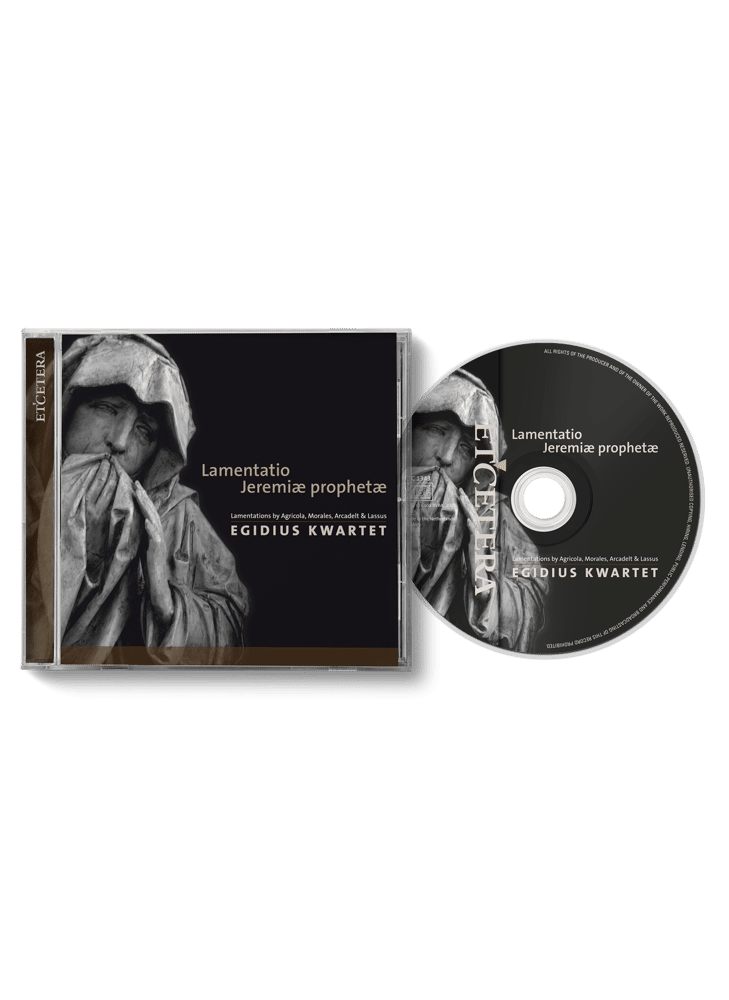
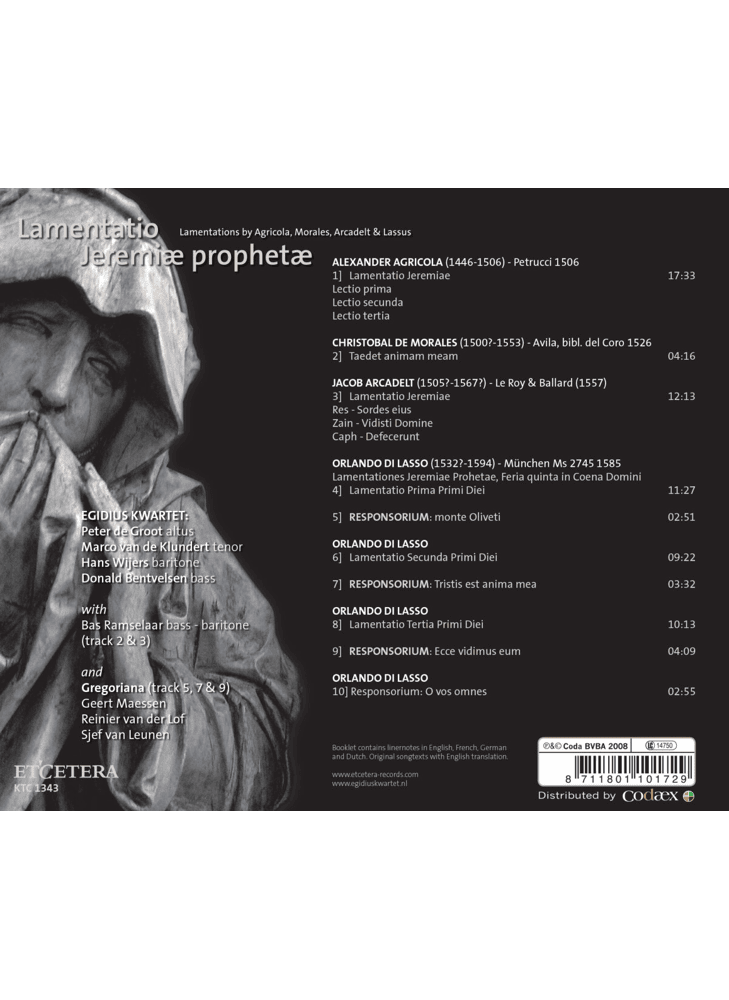
Lamentatio Jeremiae Prophetae
ETCETERA RECORDS
Egidius Kwartet
Omschrijving
The Lamentations of the prophet Jeremiah were written to commemorate the devastation of the city of Jerusalem and the fall of Judah in 586 BC. The text of the Lamentations is deeply emotional; it makes rich use of metaphor and has a style that is well suited to rhetorical turns of phrase as well as images that penetratingly express the sorrow, powerlessness, bitterness and supplications of the people of Jerusalem.
Thanks to the desolate character of the text and by the liturgical placement of the Lamentations before sunrise during the darkest days of the ecclesiastical year, it is logical that the polyphonic settings of the Lamentations have a character that is entirely their own. All ornamentation has been removed; they are characterised by a sobriety in which the least detail and the smallest effect are immediately telling. This recording shows the development of the genre in the 16th century in a nutshell, demonstrating that the various styles of the settings are extremely varied despite their general uniformity of character. Vocal ensemble Gregoriana is responsible for the Gregorian chant in Lasso’s Lamentations.
The Egidius Kwartet was founded in 1995 by four members of Ton Koopman’s Amsterdam Baroque Choirwith the aim of performing Renaissance and contemporary music from the Low Countries (in the broadest possible sense). At the heart of their repertoire lies music written during the reign of the Habsburgers (Charles V, Margaretha of Austria, Philip II). With their research, CD”s and concerts, the Egidians sought and gained attention for the work of forgotten masters such as Nicolas Payen, Cornelius Canis and Gheerkin de Hondt. In addition to performing Renaissance music, the Egidius Kwartet aims to continue a tradition in which singers are ambassadors of new music from their country. Many Dutch composers dedicated new works to the quartet. In order to avoid any semblance of orthodoxy, every deviation from the primary mission is regarded as a welcome diversion.
**NOT FOUND** key: product.notifyMeModalHeader
**NOT FOUND** key: product.notifyMeModalText
- **NOT FOUND** key: product.notifyMeModalProduct Lamentatio Jeremiae Prophetae
- **NOT FOUND** key: product.notifyMeModalProductDetail
**NOT FOUND** key: product.orderListCreateTitle
**NOT FOUND** key: product.orderListEmptyPrompt